Archive for the ‘Torque Sensors’ Category

New Range of Rotary Torque Transducers

Thursday, November 17th, 2011

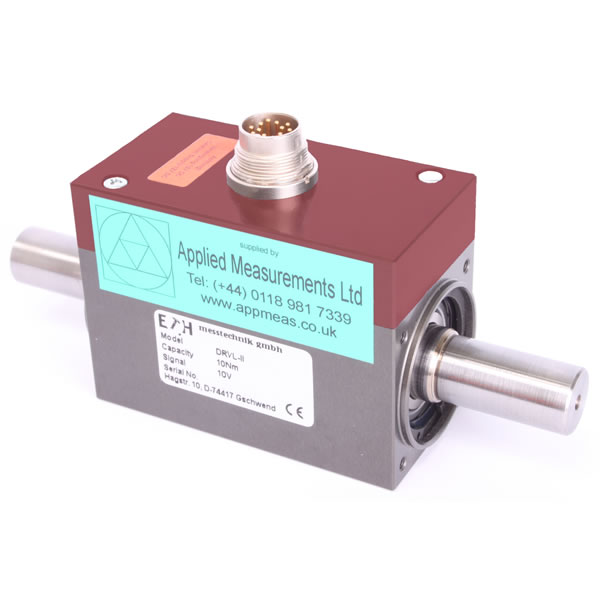
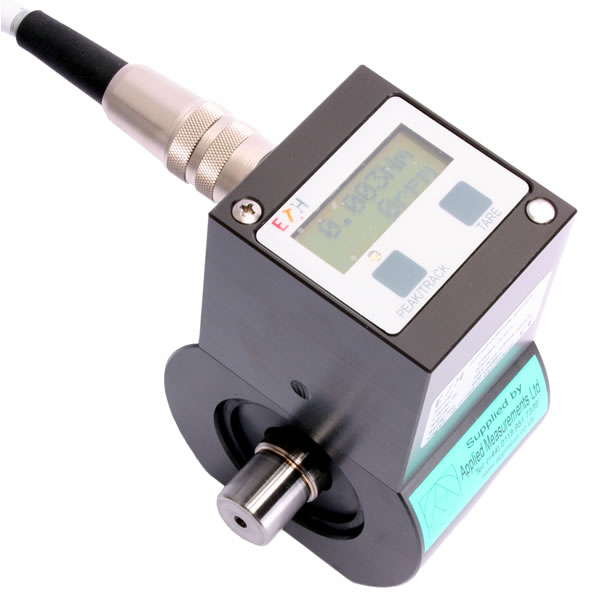
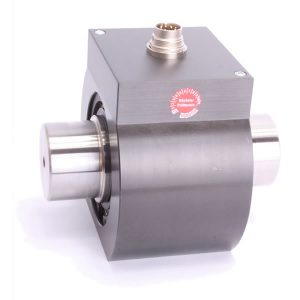
DRDL Dual Range Rotary Torque SensorApplied Measurements are pleased to announce exclusive UK distribution of a new range of brushless rotary torque transducers from German manufacturer ETH Messtechnik.  ETH were chosen for the very high performance capabilities and exemplary quality of their torque sensors which will compliment our own existing range of rotary and static types.

Initially we have introduced five torque sensors to our range, here is a brief summary of each model:

  • DRBK Low Cost Torque TransducerDRBK – A compact and low cost shaft type torque sensor available with capacities from 0-5Nm up to 0-1000Nm, maximum speeds up to 22,000rpm and a ±5Vdc conditioned output signal.  A pulsed speed/RPM output is optional.
     

  • DRFL High Accuracy Torque TransducerDRFL – A compact, high performance shaft type torque sensor with an accuracy class of ±0.1%/rated capacity.  Capacities available range from 0-0.05Nm up to 0-20,000Nm with maximum speeds up to 37,000rpm.  Torque output is ±10Vdc with optional pulsed speed and angle outputs available if required.
     

  • DRFN Rotary Square Drive Torque SensorDRFN – A square drive type torque sensor suited to torque tool testing, automotive assembly and manufacturing applications.  Square drives are to DIN 3121, capacities range from 0-0.5Nm to 0-5000Nm and torque output is ±5Vdc.  A pulsed angle output is optional with rotational speeds up to 12,000rpm possible.
     

  • DRDL Dual Range Rotary Torque SensorDRDL – A dual-range shaft type torque sensor with rated capacities from 0-0.5 to 0-1500Nm available. The second measuring range is factory-set to anywhere from ½ to 1/10 of the primary measuring range (rated capacity), i.e. Range 1 = 0-2Nm, Range 2 = 0-0.2Nm.  An electrical output of ±10Vdc per range is provided as standard with pulsed speed or angle outputs optional.
     

  • DRWPL IP67 Waterproof Rotary Torque SensorDRWPL – A shaft type IP67-rated waterproof torque sensor designed for use in harsh operating environments where dust, dirt, moisture and water are present, it can even withstand short-term immersion!  Rated capacities range from 0-0.1Nm up to 0-1500Nm with a ±10Vdc output provided as standard with pulsed speed or angle outputs optional.  This unit offers superb accuracy of
    <±0.1%/rated capacity along with maximum rotation speeds up to 20,000rpm.
     

Standard or customised couplings can be offered to suit all of the above torque sensors ensuring simple integration into your system whilst maintaining maximum performance.   Associated monitoring and control instrumentation can also be supplied calibrated and configured with your chosen sensor as a complete torque measurment system.

Contact our expert sales team to discuss your application today either by phone (+44 (0) 1189 817339), email, or via our online web enquiry form.

Rotary Wireless Torque Transducers Use Battery-Powered 2.4GHz Telemetry

Tuesday, October 5th, 2010

DTDR-F Wireless Telemetry Rotary Torque TransducerApplied Measurements are proud to introduce the DTDR-F rotary wireless torque transducer, a novel design that expunges stator coils and inductive transmission systems from the design brief in favour of a cutting edge, battery-powered 2.4GHz wireless telemetry data acquisition and transmission system.

The DTDR-F design is based on the DTD-F torque transducer, a flanged device designed for use in static and quasi-static torque measurement applications, with modifications to allow the incorporation of a pair of balanced Delrin housings, one containing the telemetry acquisition and transmission module and the other containing a 3.6V high capacity lithium-ion (Li-Ion) battery that is recharged in-situ.

The DTDR-F is intended primarily for use in rotating applications at speeds of up 6500rpm where a direct, in-line torque measurement is desired, but is prohibited due to access restrictions or other obstacles.  In these cases, the lack of connecting cables and additional mounting hardware make the DTDR-F the ideal choice.  The DTDR-F is, of course, also suited to static or quasi-static applications where reaction torque sensing is required.

The T24-SA telemetry acquisition and transmission module is taken from the T24 range of wireless telemetry products and offers extremely low power consumption and a range of up to 120m.  The superb power supply control capability of the T24 acquisition modules allows you to achieve a battery life of 650 hours / 27 days based on continuous use at a transmission rate of 1 per second.  Reduce the transmission rate to 1 per minute and you’ll be looking at a battery life of 1 year!

As the DTDR-F’s wireless torque transducer’s output is not polled, it is possible to have multiple receiving modules from the T24 range reading the data simultaneously.  The T24 range includes handheld indicators, analogue output modules, printers, relay modules and even USB base stations with software to read and log data onto a PC.

One existing installation of the DTDR-F features a scaled 4-20mA signal being fed into a PLC via the T24-AO1i analogue output module whilst plant engineers can take torque readings on demand from anywhere nearby using a T24-HS handheld digital indicator.

The DTDR-F can also be used for dynamic torque measurement applications if fitted with the high speed T24-SAf acquisition module, which increases the output bandwidth to 2kHz (2000 readings per second).

Contact our sales engineers on +44 (0)1189 817339 or via info@appmeas.co.uk to discuss your requirement in detail.

Links

LowStir Friction Stir Welding System

Thursday, March 11th, 2010

Friction stir welding is a welding process invented by TWI in 1991.  The process involves a spinning tool, in contact with the material to be welded, with sufficient down force to create frictional heat in the material (about 80% of the material’s melting point).  This causes the material to become soft, allowing the spinning tool to create the weld.

Friction stir welding is now widely used in the aerospace, automotive, rail and ship building industries.

Unlike other friction stir welders, the LowStir friction stir welding LowStir Welding Unit In Action - Image 1system includes a unit that attaches to most standard milling machines via an ISO taper, making it an affordable option to smaller enterprises.  It is supplied with software to calibrate the system, monitor the welding process and log welding parameters for later analysis.

The current LowStir base system comprises the necessary hardware and software to convert a suitable milling machine to a LowStir stir-welding system including an ISO taper (or equivalent) to fit it to the milling machine.  Since this depends on the particular machine, the size and type of taper must be specified when requesting a quotation (as costs of tapers can vary).

Benefits of Friction Stir Welding

  • Improved weld properties (e.g. strength, fatigue) compared to arc welding or riveting.  Joint efficiencies of 75-96% have been reported depending on materials.
  • Because it is a solid phase process (where the materials are joined without melting) no shielding gases or filler materials are required. Furthermore, there is almost complete elimination of weld distortion and solidification defects.
  • Operators do not need special qualifications or certification.
  • There’s no arc welding, gas emissions or weld spatter involved.
  • Vastly reduced preparation and reworking time reduces costs, time and labour requirements.
  • Low power consumption; The only energy required is to rotate the tool and apply force to it to create the frictional heat.  Without the large current requirements of arc welding, energy consumption can be reduced by 80% plus.

The LowStir System

Specifically, the basic components of the system are as follows:

1) LowStir Mk.2 sensor head unit including tool holder and heat shield disc.  This is supplied already bolted together as a complete system including the ISO taper, ready for installation in the milling machine head.

The LowStir unit is capable of measuring:

  • Down force (Fz) to 50kN
  • Lateral force (Fxy) to 25kN
  • Torque (Mz) to 100Nm
  • Temperature of the welding tool via an internal thermistor

The unit will run at rotation speeds of up to 3000rpm and log data at software selectable rates from 1Hz to 100 Hz.

2) Inbuilt battery.  When fully charged, the LowStir unit’s inbuilt battery has a battery life of approximately 10 hours.  The unit is supplied with a battery charger, which can recharge this battery from the mains.  The charger automatically deactivates when the charge is full, so the unit can be safely left to recharge overnight.

3) Jack plug switch.  The unit is also supplied with a jack plug switch which can be inserted to completely disable the unit and store any remaining charge.

4) Set of tool assemblies.  A typical assembly comprises a low wear shank and a replaceable tool (probe).  If you order one tool type there will be one shank and ten probes supplied.  If you order two different types of tool then there will be two shanks (one for each material to be welded) and five probes supplied for each of the two shanks.

5) Taper.  As mentioned above, the system includes an ISO taper or equivalent specific to the milling machine to which the LowStir is to be attached.  The size and type of taper required must be detailed in advance, and ordering the incorrect taper will make it impossible to fit the LowStir unit.

6) Software for monitoring and recording various parameters of the weld.  Note that the software is supplied uninstalled and uncalibrated.  We strongly recommend the optional laptop package, as this is supplied with the software and Bluetooth connection fully set-up and calibrated.  See Optional Extras below for more details.

Optional ExtrasLowStir Welding Unit In Action - Image 2

The following are optional extras that can be supplied at extra cost.  Please specify any extras required when requesting a quotation.

1) Internal temperature probe.  The system can be supplied with an internal probe which is used to monitor the temperature of the weld pool via a probe fitted to the inside of the welding tool holder.

2) Laptop. The software can be provided ready installed on a laptop computer.  In addition, the software will be calibrated for the specific LowStir unit, and the Bluetooth connections established between the laptop and the unit.  It is strongly recommended that this option is taken, as it means that the system is ‘plug and play’ and removes the need to calibrate the system on-site.

Licence

Please Note: Currently you will need a licence from TWI to carry out friction stir welding.  This applies to ALL forms of friction stir welding, including using LowStir.  Please contact TWI or David Johnson at Applied Measurements Ltd for more information.

Custom Torque Sensors Now Available on Standard Lead Times

Wednesday, July 1st, 2009

dtd-s-200x200

A UK manufacturer of torque sensors is offering custom designed static/reaction torque transducers on similar lead times to its standard units, with only a small premium on the standard list price.

Applied Measurements Ltd, based in Aldermaston, is able to design and manufacture custom torque sensors to meet any customer requirement, including different flange diameters, unusual sizes of square drive, special sealed versions and shorter, more compact designs.

According to Peter Lewis, Managing Director at Applied Measurements: “Many manufactured products require fatigue testing to ensure that they can operate for a guaranteed minimum period of time.  An accelerated life test, for example, may be carried out on a drive shaft to determine the torque limits.  The fatigue testing can sometimes be an afterthought. If this is the case, some kind of customised sensor is then required before the torque sensor can be coupled to the test unit.  This is what Applied Measurements specialises in.”

Whilst Lewis concedes that there are plenty of companies able and willing to supply static (reaction) torque sensors from their standard range, many do not offer customised designs, let alone on lead times that are similar to standard product.

Applied Measurements manufactures two types of static torque sensor as standard, a square drive mounting type and a flange mounted unit.  The DTD-S square drive mounting sensor is designed specifically for measuring direct torque and is ideal for use in the calibration or testing of torque tools (screwdrivers, spanners, etc) in a quality assurance and inspection environments.  The sensor is constructed from stainless steel and is protected to IP65.  For fast, easy connection, the sensor is supplied with an integral, robust bayonet lock military connector.  The DTD-S is available from 10Nm up to 50,000Nm as standard, with custom versions rated to 200,000Nm.

dtd-f-200x2001The DTD-F range of flange mounting static torque sensors are also designed to measure direct torque, but are ideally suited to fatigue test applications.  Again, the units are finished in stainless steel and are protected to IP65.  The sensor is provided with an integral, robust bayonet ‘lemo’ connector for fast, easy connection.

As Lewis continues: “The flange mounting sensors are normally used in applications where there are two mating faces, one driving or applying the torque and the other resisting the torque.  For any torque sensor to work, there has to be a reaction or load to generate the resistance to motion and hence torque.”

“While we offer customers a range of standard torque sensors, we also have the ability to design and manufacture custom torque sensors, where the standard unit does not suit the application.  It could be the size and shape of the sensor that needs changing, but could also include the need for odd size ranges that fall between the standard increments.”

Lewis says this could include making the sensor longer, shorter, broader, or with different flange diameters and thicknesses.  Units with different hole spacing or with an odd size of square drive may be requested.  As an alternative to the square drive unit, Applied has also custom designed round shaft units with keyways.  By creating a tubular design and applying the gauges internally, it is possible to create high integrity sealed units for wet environments.  Other custom torque sensor designs have included two-axis measurement of combined force and torque, pressure-compensated models or complete submersion units.

Applied Measurements has supplied custom static torque sensors to a variety of customers and industry sectors, including aerospace, marine, oil and gas, robotics, machine building and plastic moulding machines.

Applied Measurements’ full range of static torque sensors can be seen here.  Alternatively, please call the sales department on 0118 981 7339 or email: info@appmeas.co.uk.

Custom Load, Pressure, Torque and Displacement Sensors for Machine Builders

Friday, May 1st, 2009

By providing custom design services for its range of load cells, torque sensors, pressure transducers and displacement sensors, Applied Measurements Limited is helping machine builders and systems integrators to reduce lead times, cut costs and improve quality.

“Despite the current economic downturn, we have grown our sales revenues by more than 30 per cent over the last three years,” says Peter Lewis, Managing Director at Applied Measurements Limited. “A major part of this growth is coming from our custom design service for our products, which include load cells, torque sensors, displacement sensors and pressure transducers. We are supplying one-off designs, pre-production prototypes, high volume specials, direct competitor equivalents, as well as modifying or strain gauging existing components.”

According to Lewis, many of Applied Measurements’ global customers now request custom designs on as fast a lead time as possible. “Rather than trying to make existing, standard catalogue sensors ‘fit’ their application, customers now seem to want custom solutions delivered in as short a time frame as possible. After all, there seems little point in offering a custom design service for your sensor if the lead time doubles as a result. Customers simply won’t wait that long. In most cases, we can deliver a custom solution – including concept design, engineering, production and calibration if required – in just six to eight weeks from customer order.”

In a tough economic climate, says Lewis, Applied Measurements has recognised that this ability to meet a customer’s exact design requirements on a competitive lead time, has given the company a clear edge on its competitors.

”Our design service not only includes the ability to design new custom sensors,” says Lewis, “but also includes manufacturing direct equivalents to existing competitor products, as well as retrofit versions that the competitor may have ceased to produce. It can also include the bonding of strain gauges to metal structures or housings provided by the customer and then completing these into a finished, certified and tested product.”

Machine builders and systems integrators often need to upgrade a machine for the end user, to include new electronics or instrumentation, from older mechanical gauges or dials. As Lewis states: “In this age of accountability, it is important to have sensors that are connected to the appropriate instrumentation, including PCs that log and record the measurement data, providing traceability for the end user. In these types of applications, there are usually physical restrictions that also need to be overcome, as the customer is likely to want minimal disruption to the original machine. This is where our ability to fit in with the existing design is a big advantage to the customer. Our combination of mechanical and electronics design capability also helps here.”

Many machine builders need their systems to measure in more than one axis at a time. For this, Applied can design two or three-axis force sensors, with a variation on this when customers want a sensor to combine two measurements, such as force and torque, or force and acceleration.

The aim of the custom design service is to provide customers with a solution that exactly fits their measurement requirements under the constraints of cost, size, environmental conditions, general performance specification and availability. As Lewis puts it: “An incorrectly chosen transducer to fulfill a particular measurement application costs considerable time and money if it is eventually discovered that the data being collected is meaningless, or that the transducer is performing incorrectly due to overloading or poor installation.”

“Our experienced application engineers will talk through the measurement requirements with the customer in order to determine the most appropriate solution. This typically includes discussions on the measurement range required; dynamic transient effects; space restrictions; accuracy levels; and whether there are any unusual environmental conditions to consider.”

For more information on Applied Measurements’ custom engineered solutions please contact our sales department on 0118 981 7339 or send an e-mail to info@appmeas.co.uk.