Archive for the ‘Wireless Telemetry’ Category

Force Measurement Determines The Effect of Girth Tension on Horse Gait

Friday, January 7th, 2011

Moulton College, Northampton – Using electrical systems for the measurement of mechanical forces is by no means limited to machines and laboratory based applications. In her recently completed research thesis ‘Girth Tensions and their Effects on Equine Stride Characteristics’, Sue Wright of Moulton College Northampton used load cells, motion sensors and GPS amongst other technologies to measure and record the tension within the girth strap used to hold the saddle in place.

The aim of the investigation was to determine if girth tension affects equine stride characteristics.  The positioning and tightening of the girth strap has traditionally been based on the rider’s preference or own training, in the knowledge that too loose or too tight would be dangerous to both rider and horse.

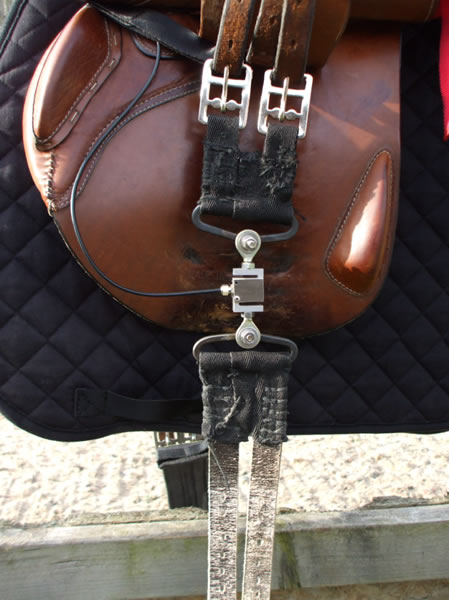
Equine Girth Strap Force Measurement in Action at Moulton College

It is well known that optimum girth tension varies between the size and type of horse, the activity –racing etc and the type of girth. However there is little if any published information on girth tension and how this may affect the locomotion of the horse, that is duration, stride length and speed.

A custom designed S-type tension load cell was used to continuously monitor the tension in the girth during the period under test. The load cell was mounted almost vertically alongside the chest of the horse where unwanted torsional effects on the load cell would be at their minimum, it was fitted to the strap via rod-end bearings and a cam buckle so that minute changes to the girth tension could be made.

This was connected to a T24 telemetry module, located in a pouch on top of the saddle which transmitted the force measurement reading wirelessly to a telemetry base station located nearby.  This was plugged into a laptop that served to both power it and log the tension reading.

Extensive testing on 19 horses at 4 girth tension settings were conducted resulting in definite conclusions on the effect of girth tension on the speed, stride length, stride duration and walk.

This application is typical of the way in which Applied Measurements’ custom force sensors are helping all sectors of research and development as well as solving the needs of industrial production.

For more information on our custom force sensors capabilities and other load measurement products, please contact us on 0118 9817339 or email info@appmeas.co.uk

Rotary Wireless Torque Transducers Use Battery-Powered 2.4GHz Telemetry

Tuesday, October 5th, 2010

DTDR-F Wireless Telemetry Rotary Torque TransducerApplied Measurements are proud to introduce the DTDR-F rotary wireless torque transducer, a novel design that expunges stator coils and inductive transmission systems from the design brief in favour of a cutting edge, battery-powered 2.4GHz wireless telemetry data acquisition and transmission system.

The DTDR-F design is based on the DTD-F torque transducer, a flanged device designed for use in static and quasi-static torque measurement applications, with modifications to allow the incorporation of a pair of balanced Delrin housings, one containing the telemetry acquisition and transmission module and the other containing a 3.6V high capacity lithium-ion (Li-Ion) battery that is recharged in-situ.

The DTDR-F is intended primarily for use in rotating applications at speeds of up 6500rpm where a direct, in-line torque measurement is desired, but is prohibited due to access restrictions or other obstacles.  In these cases, the lack of connecting cables and additional mounting hardware make the DTDR-F the ideal choice.  The DTDR-F is, of course, also suited to static or quasi-static applications where reaction torque sensing is required.

The T24-SA telemetry acquisition and transmission module is taken from the T24 range of wireless telemetry products and offers extremely low power consumption and a range of up to 120m.  The superb power supply control capability of the T24 acquisition modules allows you to achieve a battery life of 650 hours / 27 days based on continuous use at a transmission rate of 1 per second.  Reduce the transmission rate to 1 per minute and you’ll be looking at a battery life of 1 year!

As the DTDR-F’s wireless torque transducer’s output is not polled, it is possible to have multiple receiving modules from the T24 range reading the data simultaneously.  The T24 range includes handheld indicators, analogue output modules, printers, relay modules and even USB base stations with software to read and log data onto a PC.

One existing installation of the DTDR-F features a scaled 4-20mA signal being fed into a PLC via the T24-AO1i analogue output module whilst plant engineers can take torque readings on demand from anywhere nearby using a T24-HS handheld digital indicator.

The DTDR-F can also be used for dynamic torque measurement applications if fitted with the high speed T24-SAf acquisition module, which increases the output bandwidth to 2kHz (2000 readings per second).

Contact our sales engineers on +44 (0)1189 817339 or via info@appmeas.co.uk to discuss your requirement in detail.

Links

New Wireless Telemetry Systems For Strain Gauge Sensors

Friday, July 16th, 2010

For years the demands placed on higher performance measurement systems have meant they are often less versatile than their predecessor.  More sensors means more data is acquired over an increasing number of measurement channels and with these advances has come corresponding concerns regarding cable integrity and management.

This places emphasis on the test technician who is well used to swapping between sensors and matching them with the cable of the right length and appropriate connector.  Running cables across floors or through sensitive areas is at best inconvenient; with high performance cable products subject to mechanical damage throughout routine use.  Considered the weak link of many a measurement system, they are often the first focus of attention whenever measurement errors do occur.

For the best possible quality of signal, to avoid cable losses and measurement errors the strain gauge conditioning unit should be positioned as close to the measurement as possible.  However in large buildings or structures, or where many channels of measurement are required, this is often not convenient.

However a solution to these issues is only that if it solves these problems without slowing or degrading the existing flow of information, or reducing the ability to create new channels for data acquisition.

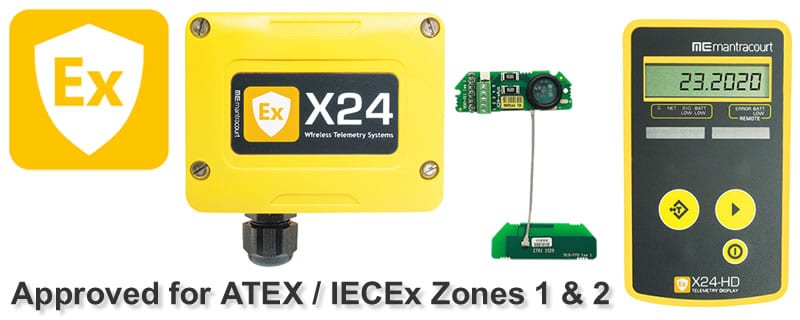
Applied Measurements Ltd has launched the T24 range of 2.4GHz wireless telemetry systems to connect to any strain gauge based sensor for the measurement of load, pressure, torque and displacement as well as standard 0-10V & 4-20mA sensors.  This means customers are now able to connect wirelessly using low power radio techniques, which allows data to be collected over many channels simultaneously.  The acquisition module uses a secure transmission network and provides live data over distances of up to 120m line-of-site and even further using external antennas.

The range of wireless telemetry products include:

  • T24-xA  -  Acquisition Modules  -  Voltage / Current / millivolt input
  • T24-RM  -  Relay Output Module  -  for limit or relay alarms
  • T24-HS  -  Handheld Displays  -  for configuration, taring, summing etc
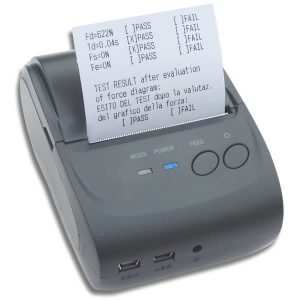
  • T24-PR1  –   Printer Module  -  wireless thermal printer
  • T24-AO1  -  Analogue Output  -  4-20mA / 0-10Vdc / ±5Vdc
  • T24-BSu  -  USB Base Station  -  for data collection and configuration

The T24 Wireless Telemetry Range

Each acquisition module can be used to supply data to several different output devices, or receive data from a multiple of acquisition modules.  This inbuilt flexibility avoids dedicated components and means uses do not need to stock application specific modules.

The data acquisition PCB’s have been miniaturised sufficiently, so that they can be mounted directly within the sensors themselves.  This means if need be, the signal can be transmitted directly form the sensor (load cell, pressure transducer etc) with no external cabling.

Some examples of wireless telemetry system applications include the following (more information can be supplied on any of the examples given):

  • Automotive – Torque Measurement
  • Civil Engineering – Monitoring of Anchor Loads
  • Construction – Monitoring of Building Foundations
  • Lifting & Handling – Crane Load Pins
  • Marine – Mooring Ropes
  • Silo & Weighing Industry – Silo Weighing
  • Theatre & Outside Events – Stage & Rigging Monitoring
  • Waste Management – Skip Weighing
  • Alternative Energy – Wind Turbines

Approved for use by the FCC, ETSI and Industry Canada amongst others, the T24 wireless systems are based on a proprietary 804.15.4 chip and the range of wireless products co-exists with Bluetooth, Zigbee & WiFi devices without conflicts.  The 2.4GHz band on which it operates is license free around the World and importantly, data being transmitted is secure as each of the radio modules use a unique 6-digit Hexadecimal key and interference is avoided through the use of a proprietary protocol.

To set up the measurement a software toolkit is supplied as a free of charge downloadable file (Freeware).  This provides the user with the means to view and alter the device parameters and perform the calibration of all the modules wirelessly.  Additionally, radio link quality and sensor integrity can be checked, configurations can be stored, data can be logged to a CSV file and PC based reports can be prepared.

T24 data viewer and logger screenshot

T24 Data Viewer & Logger Screenshot

Some of the features / benefits derived from the wireless telemetry systems include:

  • No costly purchase of cables or the associated inconvenience
    of identification, storage and maintenance.
  • Eliminates measurement errors due to cable failure or connection problems.
  • Wireless is particularly suitable for some rotating or precision applications.
  • A wireless link can cost less than buying and installing a cable.
  • The acquisition modules are designed to sleep / wake to preserve battery life.
  • Existing PC terminals are used to log data from acquisition modules on site,
    so no additional hardware is required.
  • Once time stamped the data collected is forwarded to your server,
    desktop or mobile device in real time.

The benefits of this new product have been realised by one recent new customer as manroland Ireland’s Managing Director Martin Lockley says, “the fact that there are no wires and that the units are battery driven, makes this equipment very easy to deploy.  The load cell is being used to measure the clamping force in an area that is protected by light curtains and as such a wired system would not have been safe or practical to use in this environment.”

The wide-ranging potential for wireless signal transmission means that it is perfectly possible that in the not too distant future, measurements incorporating cables are limited to task specific applications.

The strength of the argument to go wireless in many applications is overwhelming. Having first hand knowledge of the problems associated with some cabling requirements, the demand on wireless systems is bound to increase still further and Applied Measurements will be well placed to take advantage of the solution.

If you require any help in the selection of the appropriate T24modules, our engineering staff will guide you through the process of matching the appropriate modules and getting the most out of wireless.

View the full T24 Wireless Telemetry range here

You can contact our sales engineers on +44 (0) 1189 817339 or by email: info@appmeas.co.uk